Protozoa
Exploring the world of protozoa
Paramecia and other single-celled organisms – discover, examine under a microscope, understand
A single drop of water is enough to reveal an entire world. It is teeming with tiny protozoa: paramecia, amoebae, euglena, and other single-celled organisms that demonstrate how life functions at the cellular level. They move, absorb food, react to light stimuli, divide – and are therefore the perfect models for clearly illustrating basic biological principles.

Our protozoa at a glance
At Carolina Science, teachers and researchers will find a hand-picked selection of single-cell cultures bred for schools and universities. These microorganisms open a window into cell biology: from the rapid gliding of paramecia to the flowing shape of amoebas to the light-loving euglena:
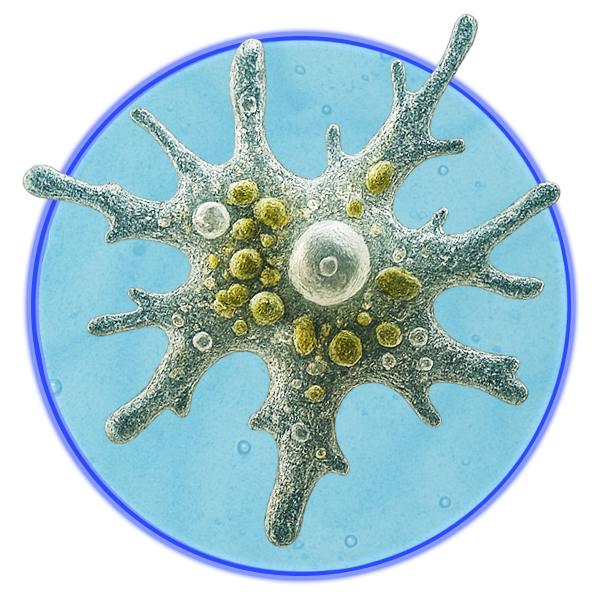
Amoebas (Amoeba proteus) illustrate cell shape, cytoplasmic streaming, and food intake.
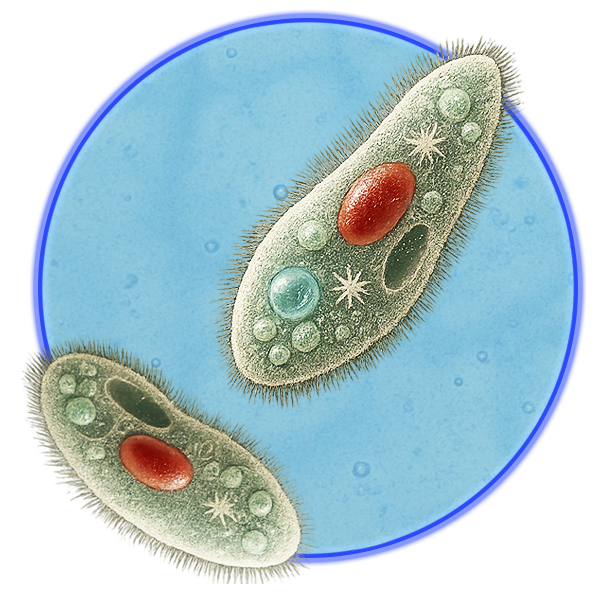
Paramecia (Paramecium caudalum) display impressive movement under the microscope.
Purchase Paramecium caudatum →
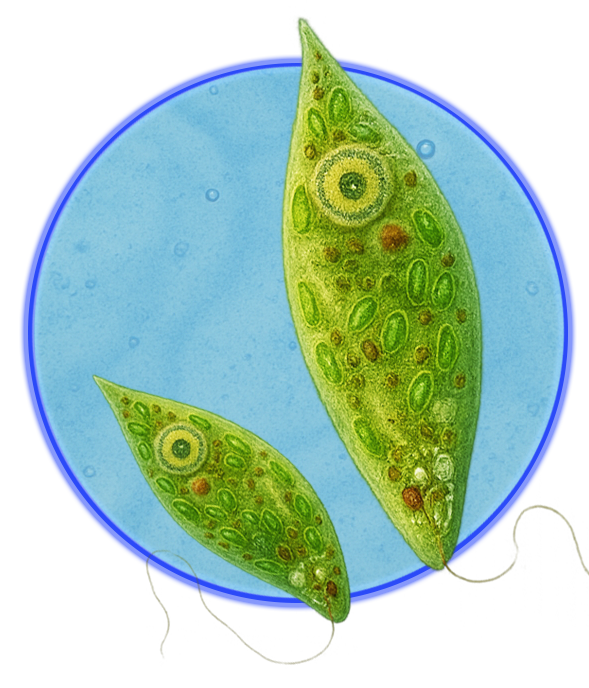
Euglena gracilis combine animal and plant characteristics, making them ideal for demonstrating photosynthesis and stimulus responses.
Purchase Euglena gracilis →
Our living single-celled organisms are robust, easy to care for, and ready to use in just a few minutes. This makes teaching a success, turning a drop of water into an entire research expedition.
Our protozoa at a glance
At Carolina Science, teachers and researchers will find a hand-picked selection of single-cell cultures bred for schools and universities. These microorganisms open a window into cell biology: from the rapid gliding of paramecia to the flowing shape of amoebas to the light-loving euglena:
Amoebas (Amoeba proteus) illustrate cell shape, cytoplasmic streaming, and food intake.
Paramecium (Paramecium caudatum) show impressive movement under the microscope.
Purchase Paramecium caudatum →
Euglena gracilis combines animal and plant characteristics—ideal for demonstrating photosynthesis and stimulus responses.
Purchase Euglena gracilis →
Our living single-celled organisms are robust, easy to care for, and ready to use in just a few minutes. This makes teaching a success, turning a drop of water into an entire research expedition.
Paramecia & Co. under the microscope
Observing paramecia under a microscope is like watching biology in motion: hundreds of fine cilia propel the tiny organisms rhythmically through the water. Microscoping paramecia is an ideal introduction to cell biology and microscopy techniques.
The amoeba also provides impressive microscope images: it constantly changes its shape and uses its pseudopodia to show how food is absorbed and digested.
The euglena, on the other hand, reacts to light – an exciting example of adaptation and energy production through photosynthesis.
These observations spark curiosity and encourage scientific thinking. Students learn to recognize, draw, and interpret biological structures. With guidance, they discover how movement, respiration, and metabolism interact in a single cell.

Experiments & Teaching
Ideas
Protozoa can be used to conduct fascinating experiments – simple, safe, and with great educational value. Biology lessons become a research laboratory where students can experience biological processes for themselves.
Exemplary teaching ideas:
- Microscoping paramecia: observing cell structure, movement, and food intake
- Investigating light stimuli: How does Euglena orient itself in the light field?
- Comparison of single-celled organisms: Recognizing differences between paramecia, amoeba, and euglena
- Observing reproduction: tracking cell division under the microscope
Microscopy experiments like these build concentration, accuracy, and responsibility when dealing with living things. They fit perfectly into topics like cells, metabolism, ecology, or evolution – and connect theory with hands-on experience.
Quality, secure delivery, and sustainable breeding
Reliable results start with reliable material. All protozoan cultures from Carolina Science are grown in Berlin, regularly tested, and delivered in secure packaging.
Each delivery contains:
- A vital culture of living single-celled organisms
- Detailed care instructions
- Didactic notes and safety recommendations
No laboratory knowledge is required – all experiments can be carried out directly in the classroom.
Our protozoa cultures are curriculum-compliant and ready for immediate use.
The packaging also follows sustainable principles: short transport routes, recyclable materials, responsible production.
Why Carolina Science?
Carolina Science represents living biology that you can touch. As one of the leading suppliers of living organisms and teaching materials, we combine expertise with many years of experience.
Our expertise is evident in every protozoan culture – from careful breeding to didactic preparation for teaching.
With our success guarantee, experiments work reliably – in the classroom, laboratory, or at home.

FAQ (Frequently asked questions)
Please click on the question to see the answer.
Paramecia, amoebas, and euglena are active, safe, and easy to observe – perfect for biology lessons.
Place a drop of the paramecium culture on the microscope slide and observe under the microscope.
Yes. All protozoa cultures from Carolina Science are non-pathogenic, originate from controlled breeding in Berlin, and are delivered in secure packaging.
Do you have any further questions?
Please feel free to contact us
Phone: +49 (30) 838 50 683
Email: info@carolina-science.de
You may also like these products: